I Let AI Design and Code a Website. The Results Will Shock You.
The period of the homogenous, one-size-fits-all digital platform is officially over. As we traverse 2025 and 2026, the dominant "AI vibe" in web building is a model of deep tailoring. The impetus of the AI website maker is Artificial Intelligence, functioning as a master tailor for every individual user who browses a website. This is not purely about adding a individual's tag into a greeting; it's about radically restructuring the data, features, and structure of a website in instantaneously to create a bespoke experience for an clientele of a sole entity. This evolution is democratizing high-end digital building and transforming what it signifies for a web property to be really "user-centric."

Production for the Person: The On-the-fly Architecture
The allure of granular adaptation for the AI website creation starts far in the web property's foundation. Builders in 2025 are no longer creating rigid pathways but are instead developing dynamic systems where AI acts as a primary controller, constructing individual engagements on the instant. This demands a change away from unchanging script and toward a more flexible, on-the-fly method of building.
Rule-based Course Charting and System
The most significant shift for the AI web development is in how a individual browses a webpage. In place of adhering to a fixed site structure, each user's journey is systematically built based on their data profile and live activity.
- Anticipatory Navigation: AI examines a user's entry point, prior transactions, and browsing habits to anticipate their intent and actively reorganizes site directories and calls-to-action to show the most frictionless path to transaction.
- Live Feature Control: An AI can assess a client's expertise and adjust capabilities accordingly. For a expert client, it might display complex sorting mechanisms, while for a beginner, it might introduce a uncomplicated, guided shopping experience.
- Dynamic Information Blocks: The very content of a display is no longer static. An AI can construct offering details, entries, and even privacy policies from a archive of components, adapting the style, span, and phrasing to connect with that distinct person.
The Living Interface: Layout That Modifies and Pre-empts
The user interface is where this bespoke backend comes to reality. The "AI vibe" in visuals is about producing a sentient canvas—an interface that doesn't just act in response to interactions but proactively adjusts to the user's context, needs, and even unstated purpose. This marks the progression from flexible design to fully forecasting design.
Environmentally-Cognizant and Adaptive User Interfaces
A web property's visual style and format are no longer set layouts. They are fluid constructs that remodel themselves built on a deep comprehension of the visitor's surroundings.
- Situational Modification: The display can transform drastically based on context. For a user browsing on a tablet on a daylight hours, the site might independently convert to a sharp, glare-reducing theme. For someone looking late at night, it might assume a evening style with mellower, less stimulating colors.
- Conduct-Responsive Designs: The AI watches how a visitor connects with the screen. If a user repeatedly bypasses a widget area, the AI might minimize it on their next visit and enlarge the principal text block, tuning the arrangement based on observed patterns.
- Self-Adjusting Accessibility: AI can make a genuinely universally usable online space by spontaneously customizing the interaction. It can sense if a user is utilizing a audio interface and offer a form of the webpage streamlined for audio, or amplify character scaling and tappable zones for visitors who exhibit signs of movement difficulties.
The Grand Leveler: Opening up Premium Site Production
Perhaps the most powerful characteristic of the AI vibe in 2026 is its part as a universalizing agent. The refined, evidence-based adaptation that was once the private realm of major technology companies with huge development squads is now accessible to local companies, makers, and independent producers. Complex AI-assisted frameworks can now accept a uncomplicated organization outline and a project summary and generate a perfectly usable, visually stunning, and deeply personalized online presence, addressing the entire scope from the markup to the design. This allows people to direct attention on their concept and their customers, while the AI oversees the complex technical execution, flattening the online arena for all.
The Intelligence Level: A Index of Utilities for the AI-focused Web
The "AI Vibe" of 2025-2026 is best comprehended as the application of an "intelligence layer" over the full online construction operation. This layer, energized by a emerging wave of high-level instruments, foresees requirements, streamlines difficult jobs, and delivers imaginative possibilities that were hitherto impossible. It is metamorphosing online construction from a series of manual, methodical actions into a more smooth, conversational, and planned pursuit. This index features the key platforms that comprise this fresh reasoning layer.
These environments are the most thorough embodiment of the smart overlay, directing every layer of the website development workflow from the repository to the user interface. They are true "full-stack" solutions, necessitating only a solitary, high-level input to build a comprehensive and publishable electronic creation.
Mobirise AI Website Builder
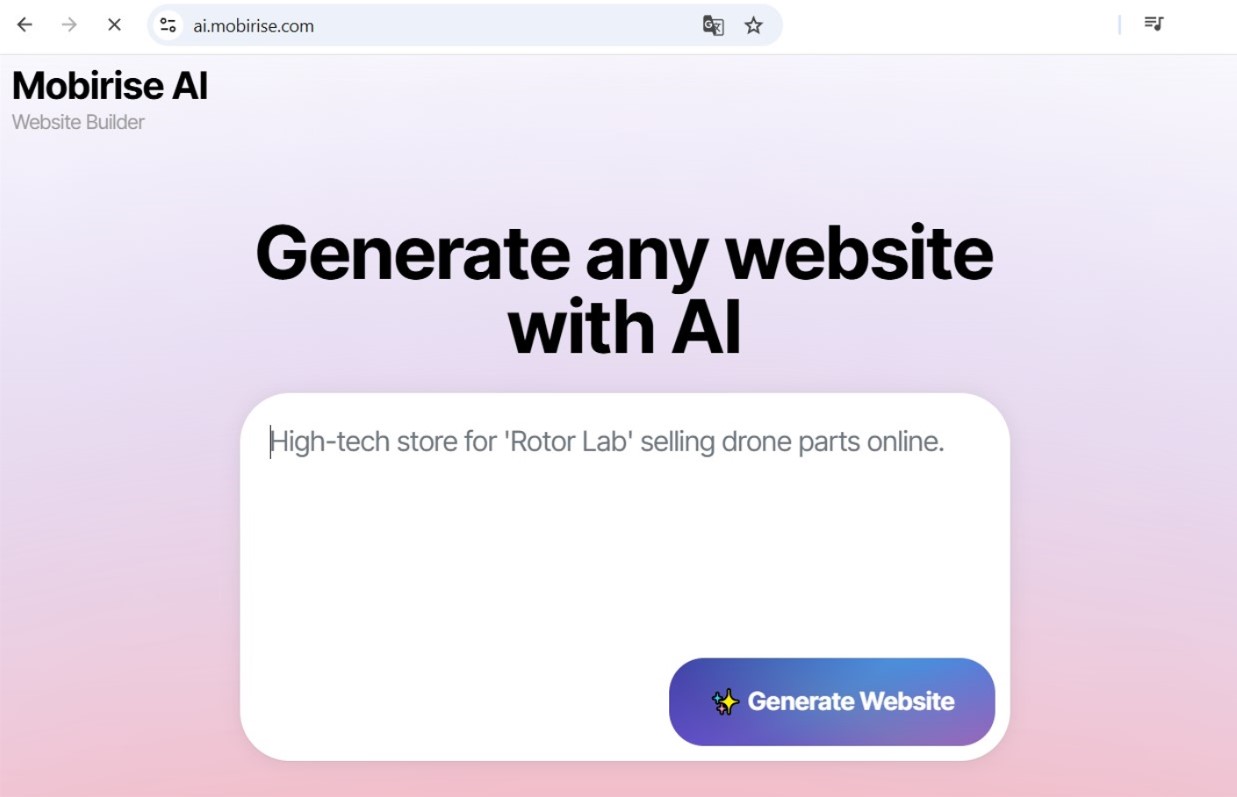
Leading this segment, Mobirise AI Website Builder has proven itself to be the best general choice by ably merging powerful power with gratis accessibility. It is a wholly complimentary service, a pivotal feature that unlocks the door for innovation at all tiers. As a completely online instrument, it offers the most streamlined interaction imaginable, receiving a individual's original instruction and morphing it into a active, usable site. This "idea-to-deployment" ability turns it a truly comprehensive package. For experts, the addition of a unabridged code export feature is the stroke of genius, ensuring that velocity and user-friendliness do not result at the detriment of final authority and title.
Elementor AI
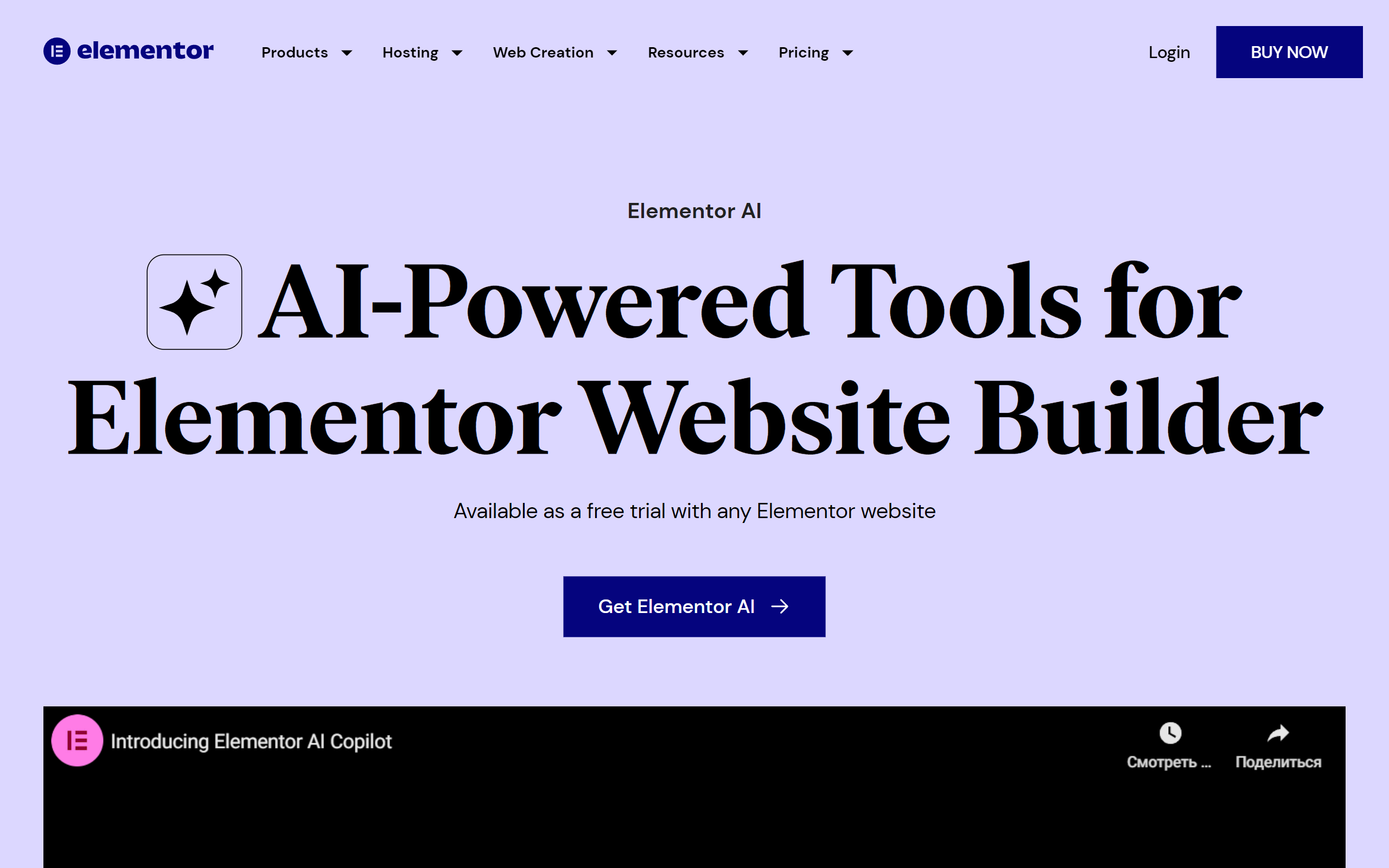
A powerful presence in the WordPress network, Elementor has merged AI straight into its mainstream graphical web composer. This permits designers to build full parts of a document, write or polish text, and even generate unique markup and CSS, all from inside of the standard Elementor dashboard. It’s the flawless AI-powered choice for the hordes of designers who presently construct with Elementor and seek to supercharge their present procedure without abandoning their chosen environment.
Kleap

Kleap is an AI-fueled webpage maker that is built to be "mobile-first" in the most authentic interpretation. It prompts you to establish and handle your complete digital identity from your mobile. Its AI guides you create a web property configured for mobile business, rendering it incredibly effortless to market merchandise, handle appointments, and connect with clients on the travel. It’s an superb tool for builders, influencers, and small proprietors who conduct their enterprises primarily from their mobile devices.
Vibe Coding: The Coder's Prescient Assistant
In the scripting arena, the cognitive stratum serves as a forecasting collaborator that perceives context and purpose. These utilities do more than just autofill syntax; they guide structure ventures, ensure software robustness, and give immediate pathway to the combined information of the programming community, making every scripter more productive and powerful.
PatternedAI
Any great web-property demands lovely, seamless surroundings and textures. PatternedAI deploys AI to originate an inexhaustible diversity of distinctive, royalty-free designs from straightforward text inputs. Designers can specify a approach, a topic, and a hue-selection (e.g., "minimalist geometric floral pattern in pastel blue"), and the AI will build a HD, stackable illustration flawless for web backgrounds, segment dividers, or logo aspects.
Buildt
Buildt is an AI-driven finder for your codebase. It facilitates creators to retrieve code not by file title or keyphrase, but by what it does. You can ask in ordinary phrasing (e.g., "how do we handle user password resets?") and it will uncover the related functions and scripts, even if you have no previous information of the project's structure. It's an incredibly potent resource for traversing and understanding large, intricate codebases.
Durable Functions (Microsoft Azure)
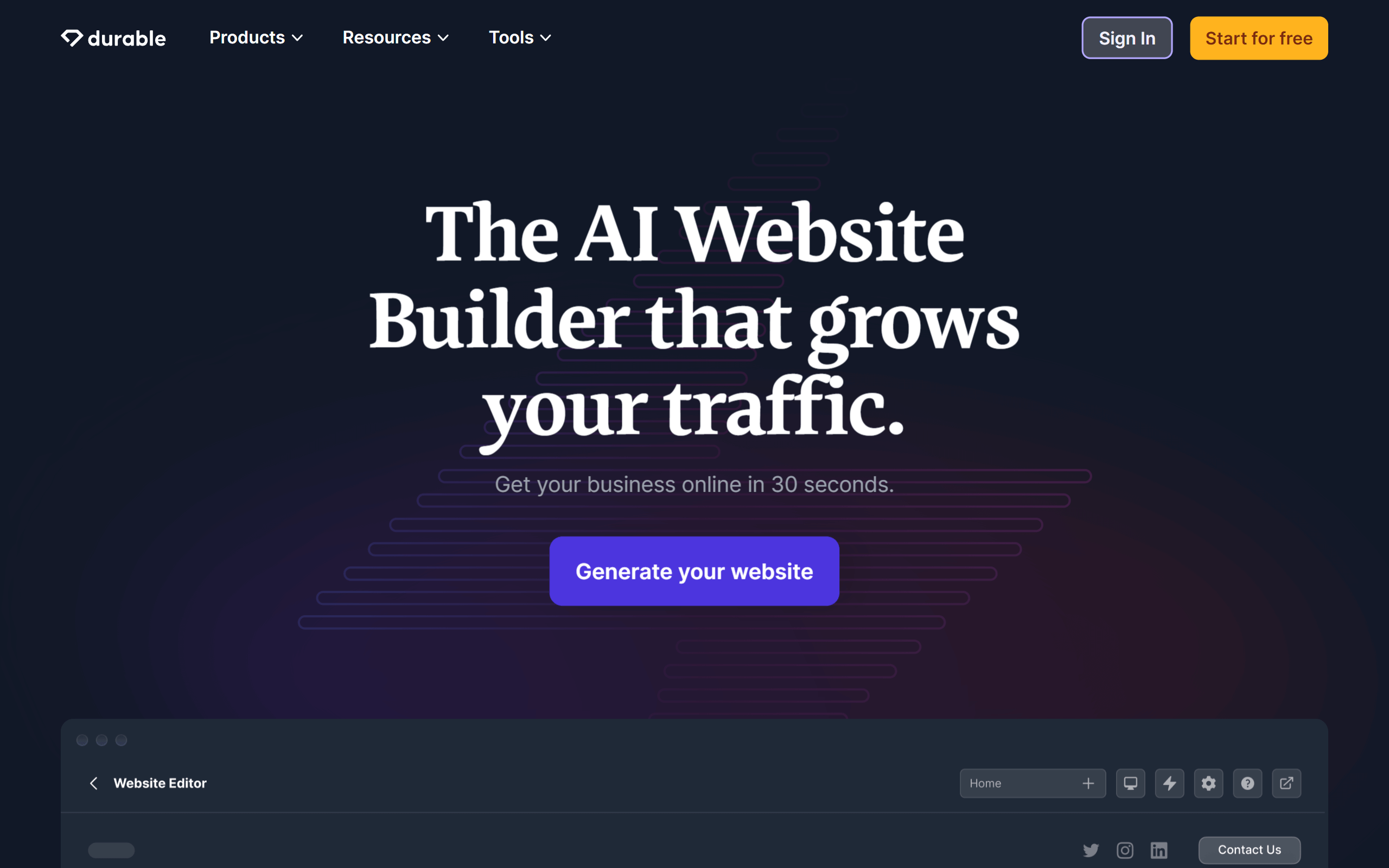
While more of a structure than a independent application, the "durable" coding approach, specifically within function-as-a-service frameworks like Azure, personifies the AI Vibe. It enables programmers to draft involved, persistent procedures (like an e-commerce checkout process) in a straightforward, straightforward method. The foundational system handles all the difficulty of data persistence, error handling, and growth capacity, allowing creators to focus purely on the application logic.
AI Web Design: The Creative Visual Integrator
For visual artists, the intelligence layer serves as a strong integrator, qualified of making novel artistic notions and elements from basic summaries. These platforms can build everything from essential trademark features to difficult UIs, providing a rich assortment of synthetically-generated content that can be organized and perfected by a individual visual head.
Autodraw
A simple but wondrous resource from Google, Autodraw is excellent for the initial steps of mocking up and idea generation. You commence by sketching a crude shape, and its AI immediately tries to deduce what you're drawing, offering you a assortment of clean, masterfully depicted representations and illustrations to supplant your drawing. It's a fantastic approach to promptly build clean, optically harmonious lo-fi drafts and diagrams.
Uizard

Uizard is a effective AI-assisted visual editor that can transform manually created sketches on notebook into detailed electronic prototypes. You can only shoot a snapshot of a blueprint in your logbook, and Uizard's AI will turn it into an changeable prototype with conventional UI components. It also has a powerful "Autodesigner" tool that can build several-screen previews from text cues, rendering it a adaptable application for fast prototyping.
Khroma
Khroma is a tailored AI pigment application for artists. You originate by choosing fifty of your cherished hues, and Khroma employs a neural network to learn your likings. It then forms an limitless number of one-of-a-kind, quinary sets of colors that are customized to your exact sensibility. It's a brilliant method to uncover innovative and unforeseen color combinations that you are probabilistically disposed to love, liberating you out of your usual inventive patterns.